







 FIND A SOCAL SHOWROOM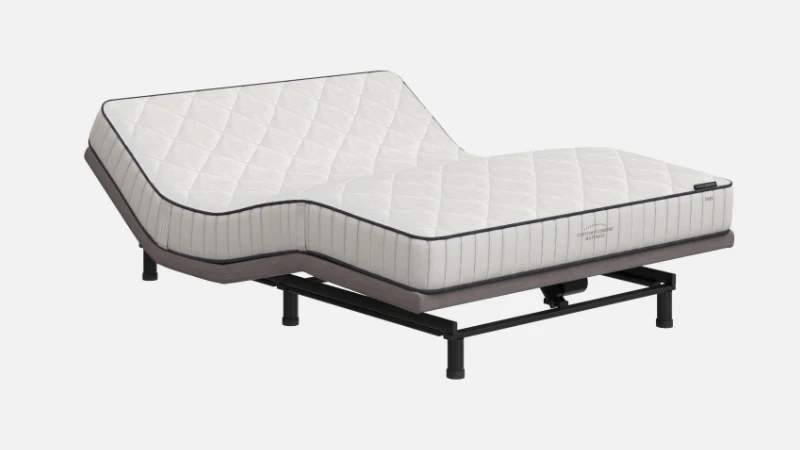











 24002 Via Fabricante, Suite 100
 949-877-3889
 24002 Via Fabricante, Suite 100








Back pain sufferers know all too well how acute or chronic back pain impacts sleep quality. You need rest to recover and repair, but you can’t sleep because of overnight pain and discomfort, and the cycle continues. The right mattress can make a huge difference in breaking this disruptive cycle and getting you the restful sleep you need.
With over 40 years of experience in solving problems like this for thousands of sleepers in need, Custom Comfort Mattress knows what mattress shoppers should look for in the best mattress for back pain. In this guide, we’ll explain how mattress construction affects lower back pain, which features to prioritize, and which mattress types offer the best support to help you find a sleep solution that supports better rest and long-term comfort.
Key Takeaways
- The best mattress for lower back pain keeps the spine in a neutral position, neither sinking nor over-arched.
- Medium-firm support produces the best outcomes for chronic lower back pain in most sleepers.
- Back and stomach sleepers need medium-firm to firm support, while side sleepers do best with medium to medium-firm.
- Latex, hybrid, and quality innerspring mattresses typically outperform memory foam for lower back pain.
- Dual-sided construction resists the sagging and body impressions that compromise lumbar support over time.
- Custom Comfort Mattress options like the Juniper, Elm, Bodhi, Calistoga, and Rutherford are handcrafted with natural materials for lasting back relief.
How Your Mattress Affects Lower Back Pain
The relationship between your mattress and your lower back comes down to spinal alignment. A well-designed sleep surface should keep your spine in a neutral position – not arched or rounded, but gently supported along its natural curve. A mattress that’s too soft allows the hips to sink, pulling the lumbar spine out of alignment. One that’s too firm can create pressure points and force the spine into an unnatural position. Either scenario can mean waking up sore, even if you’re able to get a full night’s sleep.
What you’re looking for is a mattress that provides both support and pressure relief in the right balance: firm enough to keep the hips from sinking, with enough give to cushion and relieve pressure on shoulders and hips throughout the night.
Of course, mattress choice is one piece of a larger picture. Sleep position, body weight, and any existing conditions also influence which mattress will feel most supportive for your lower back. Here, we’ll help you narrow down the right mattress type, firmness, and construction for back pain and your specific situation.
What to Look For in a Mattress for Lower Back Pain
Finding the best mattress for lower back pain comes down to balancing spinal support, pressure relief, long-term durability, and firmness. Not all mattresses provide the same quality of support, so these are the features that matter most.
A supportive core. The core of a mattress determines how well it supports the hips and lumbar region. Look for a mattress with a coil system or latex layer that holds its shape consistently throughout the night.
Pressure-relieving comfort layers. Comfort layers are the materials between you and the core that cushion the shoulders, hips, and lumbar region – especially important for firmer mattresses that can cause pressure points.
Durability and construction. Mattress quality matters for both longevity and performance. Premium craftsmanship prevents the sagging and body impressions that erode a mattress’s ability to provide proper spinal support. Dual-sided mattresses that can be flipped and rotated are worth prioritizing: they wear more evenly and maintain consistent support far longer than single-sided mattresses.
Firmness level. Research consistently points to medium-firm support as producing the best outcomes for chronic lower back pain, though personal preference, sleep position, and body weight will fine-tune the ideal firmness for any individual.
Best Mattress Types for Lower Back Pain (and How to Choose the Right One)
Different mattress constructions offer different types of support. Here’s how the main categories perform for lower back pain.
Innerspring Mattresses
A well-built innerspring mattress provides breathable, responsive support that keeps the hips from sinking. This makes them particularly well-suited for back and stomach sleepers who need the pelvis held in place.
Latex Mattresses
Latex is uniquely well-suited for lower back pain because it contours to the body while providing responsive support. Unlike the “sinking” feel of foam, breathable natural latex cradles the lumbar region and distributes weight evenly across the sleep surface. Latex mattresses are a strong choice for side and back sleepers.
Hybrid Mattresses
A hybrid mattress combines a coil support core with latex or foam comfort layers, offering a balance of responsive support and pressure relief ideal for back pain sufferers. Their breathable combination of firmness and contouring makes hybrid mattresses a great choice for sleepers who change positions throughout the night.
Memory Foam Mattresses
Memory foam excels at conforming to the body and alleviating pressure points, but only high-density options can support heavier sleepers. However, it is not buoyant or responsive, making it harder to change positions. Since it is synthetic and not breathable, foam also tends to sleep hot; cooling options can provide better comfort.
Dual-Sided Mattresses
While more of a design philosophy than a construction type, double-sided mattresses can still help with lower back pain. Because both sides are usable sleep surfaces, double-sided mattresses prevent body impressions and sagging that compromise lumbar support over time, helping the mattress maintain consistent spinal alignment for years longer than a single-sided design.
Best Firmness for Lower Back Pain
Firmness is perhaps the most important variable when choosing a mattress for lower back pain, and the right answer depends on how you sleep.
Generally, medium-firm support produces the best results for chronic lower back pain. Because this mattress feels firm enough to prevent the hips from sinking while still soft enough to relieve pressure on joints, it keeps the spine in a more neutral position for most sleepers.
That said, firmness needs shift by sleep position:
- Back sleepers generally do best on a medium-firm mattress that maintains lumbar support without creating excessive pressure on the tailbone or mid-back.
- Side sleepers need slightly more give, so a medium-to-medium-firm feel and adequate comfort layers allow the shoulders and hips to settle into the mattress while still supporting the waist and lumbar region.
- Stomach sleepers benefit from a medium-firm or firmer surface that prevents the pelvis from dropping and straining the lower back.
Body weight also plays a role. Heavier sleepers generally need a firmer mattress to prevent over-compression of the comfort layers, while lighter sleepers may find medium options more comfortable without sacrificing support.
The best mattress for back pain isn’t just about firmness; it’s also about comfort and durability. The interaction between support layers and comfort materials determines how well pressure is distributed across the body. A mattress that feels comfortable at first may not maintain proper alignment over time if it lacks structural durability and quality construction. Fortunately, Custom Comfort Mattresses offers multiple mattress options, each handcrafted with natural materials in our Southern California factory, that provide long-lasting relief and restful sleep for those with back pain.
Top Custom Comfort Mattresses for Lower Back Pain
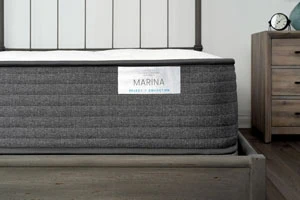
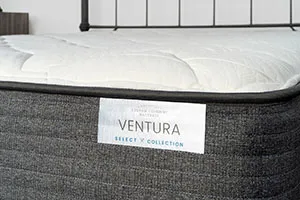
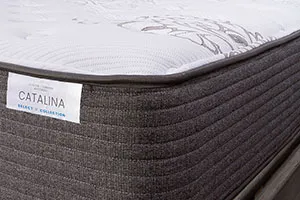
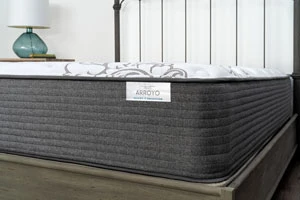
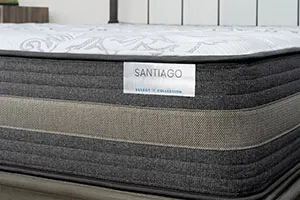
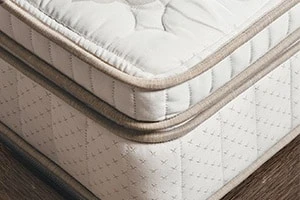
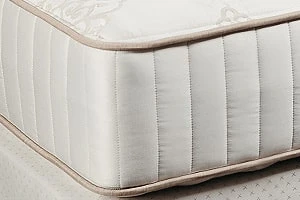
The premium dual-sided mattresses from our Heritage and Reserve Collections highlighted below address the most common lower back pain needs head-on – and alleviate them beautifully. You can also browse the Select Collection for additional handcrafted options at a range of price points.
Juniper Mattress (Heritage Collection)
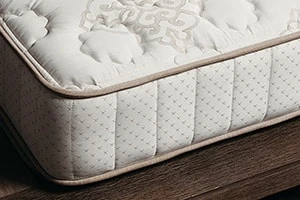
The Juniper is a medium-firm, double-sided innerspring mattress with breathable cotton upholstery and premium comfort quilting. Built with 660 Lura-Flex coils and hand-tufted for lasting durability, it’s a strong choice for back sleepers who want traditional, responsive support with natural materials.
Elm Mattress (Heritage Collection)
This all-natural latex mattress offers a medium-firm feel and exceptional pressure relief. Built with an 8″ natural latex core and a plush comfort layer on each side, it contours to the lumbar region with responsive push-back, relieving pressure on joints without allowing the hips to sink. The Elm is particularly well-suited for side sleepers, back sleepers, and active sleepers who change positions throughout the night.
Bodhi Mattress (Heritage Collection)
An extra-firm, hand-tufted double-sided innerspring, the Bodhi offers three layers of cool, breathable cotton comfort on each side of its coil core. Built with 368 offset coils for firm, responsive support, it’s well-suited for stomach sleepers, back sleepers, and heavier body weights that need a more substantial foundation to maintain proper lumbar alignment.
Calistoga Mattress (Reserve Collection)
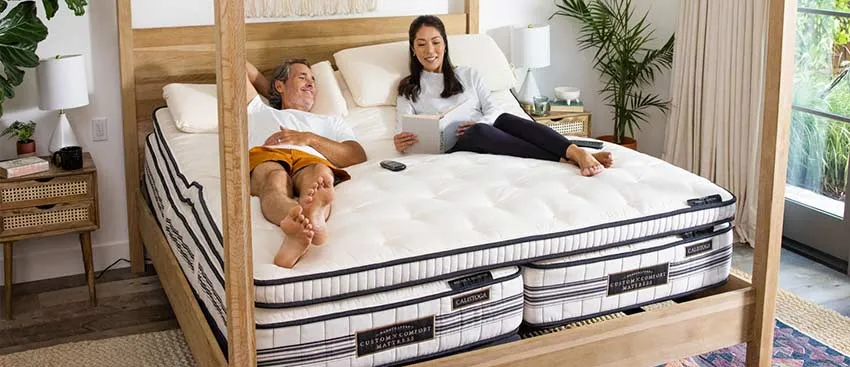
The Calistoga is a double-sided hybrid built with low-profile supportive coils and plush comfort layers of organic cotton, wool, and 100% natural latex. Its medium feel makes it a versatile option for back, stomach, and combination sleepers, and its all-natural, organic construction delivers eco-conscious breathability.
Rutherford Mattress (Reserve Collection)
This plush, double-sided hybrid features individually wrapped Bolsa coils encased in a 5″ natural latex border for firm edge support, topped with 3″ of natural latex quilted with organic wool on each side. The low-motion-transfer coil system and pressure-relieving latex comfort layers offer a softer yet supportive feel for sleepers who need joint relief and consistent lumbar support, particularly side sleepers dealing with hip and lower back discomfort.
Other Ways to Reduce Lower Back Pain at Night
The right mattress is the foundation, but a few complementary adjustments can make a meaningful difference in how your lower back feels overnight.
Pillow support. A pillow that keeps your neck aligned with the rest of your spine reduces strain that can radiate downward into the lower back. Side sleepers often benefit from a pillow between the knees to keep the hips level and the lumbar region aligned.
Mattress toppers. If your current mattress is structurally sound but feels too firm or lacks pressure relief, a quality mattress topper can add comfort without a full replacement. This can be a cost-effective bridge while you plan a larger upgrade.
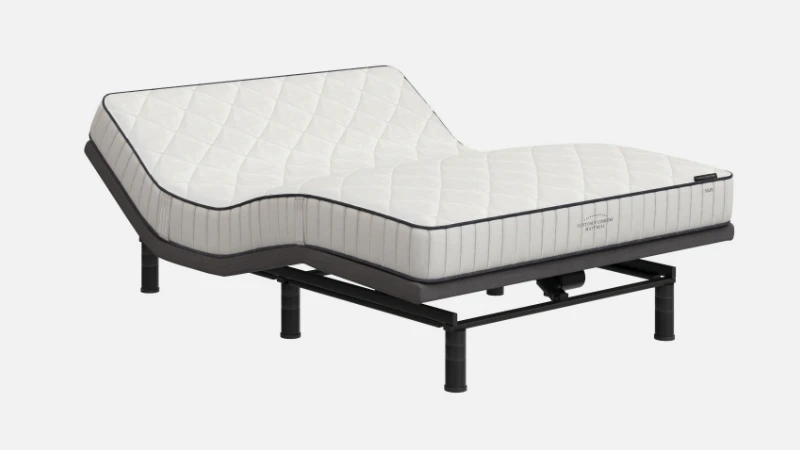
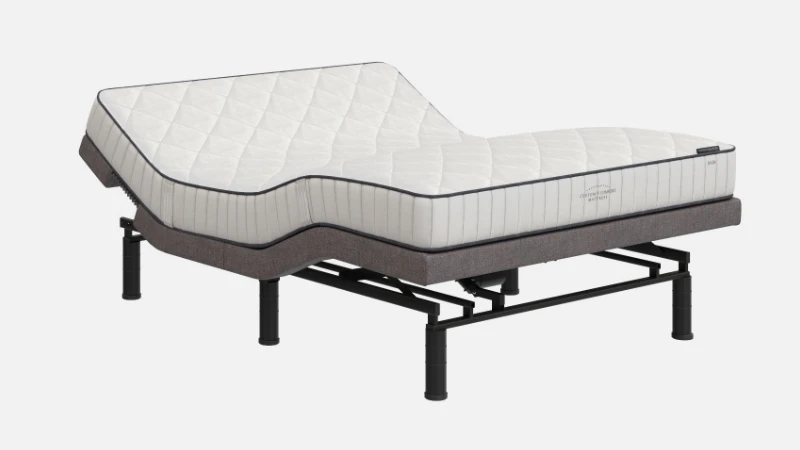
Adjustable bases. Adjustable bed bases allow for slight elevation of the upper or lower body, which can relieve lumbar pressure by reducing the load on the lower back. For sleepers who struggle with stiffness or prefer to sleep with the knees slightly raised, an adjustable base can be a worthwhile companion to a supportive mattress.
Sleep posture. Small changes in sleep habits reinforce the benefits of a good mattress. Back sleepers can place a pillow beneath the knees to reduce the lumbar curve. Side sleepers should aim to keep the knees slightly bent with the spine in a straight line rather than hunched. Stomach sleeping tends to put the most strain on the lower back and is generally worth modifying if back pain is a consistent issue.
How to Choose the Right Mattress for Lower Back Pain
With so many options, a clear decision framework helps. Here’s how to work through the choice:
Start with sleep position. Use your primary sleep position to anchor your firmness target: medium-firm to firm for back and stomach sleepers, medium to medium-firm for side sleepers.
Consider materials. If breathability, natural sourcing, and long-term health are priorities, look for mattresses built with natural latex, organic cotton, and wool rather than synthetic materials. Natural materials also regulate temperature better and avoid the off-gassing associated with petroleum-based foams.
Prioritize construction that lasts. A mattress that maintains its support over time is more valuable than one that feels great initially but develops body impressions within a few years. Dual-sided construction is the most reliable way to extend a quality mattress’s supportive life.
Get a personalized fitting. No guide can replicate the experience of lying on a mattress. Not sure where to start? Take our Mattress Match-Up quiz to narrow down your options, then schedule a complimentary mattress fitting to feel the difference in person. Custom Comfort Mattress’s 365-Night Comfort Guarantee provides additional assurance: if you need to make adjustments within the first year, we’ll make it right.
Find Your Perfect Match for Lower Back Pain Relief
The best mattress for lower back pain is one that keeps your spine aligned, complements your sleep position, and maintains structure and support over time.
For most lower back pain sufferers, the right mattress comes down to medium-firm support, high-quality materials that hold their shape, and construction built to last. Innerspring, latex, and hybrid options each have a strong case depending on your sleep habits, and dual-sided construction is worth prioritizing for long-term lumbar support.
Visit one of our eight Southern California showrooms for a complimentary, no-pressure mattress fitting with one of our sleep specialists. They’ll help you find the right support for your body, your sleep position, and your lower back — so you can wake up rested and pain-free.
Reviewed & Approved By Custom Comfort Mattress
Custom Comfort Mattress is a family owned California mattress manufacturer crafting handcrafted mattresses since 1986. Each guide is reviewed by our mattress expert to ensure accuracy, material expertise, and comfort insights drawn from decades of craftsmanship and personalized showroom fittings. Explore our Stories of Comfort to see how customers experience the difference.